


Not Your Hair, Your Habits: Filipino Hair Care Has Been Getting It Wrong


Bad hair in the Philippines is often treated like a personal failure. When strands fall flat by noon or frizz takes over before the day even ends, the instinct is to blame the product—or worse, the hair itself. The solution has always been to switch, upgrade, or import something better.
However, that assumption doesn’t hold.
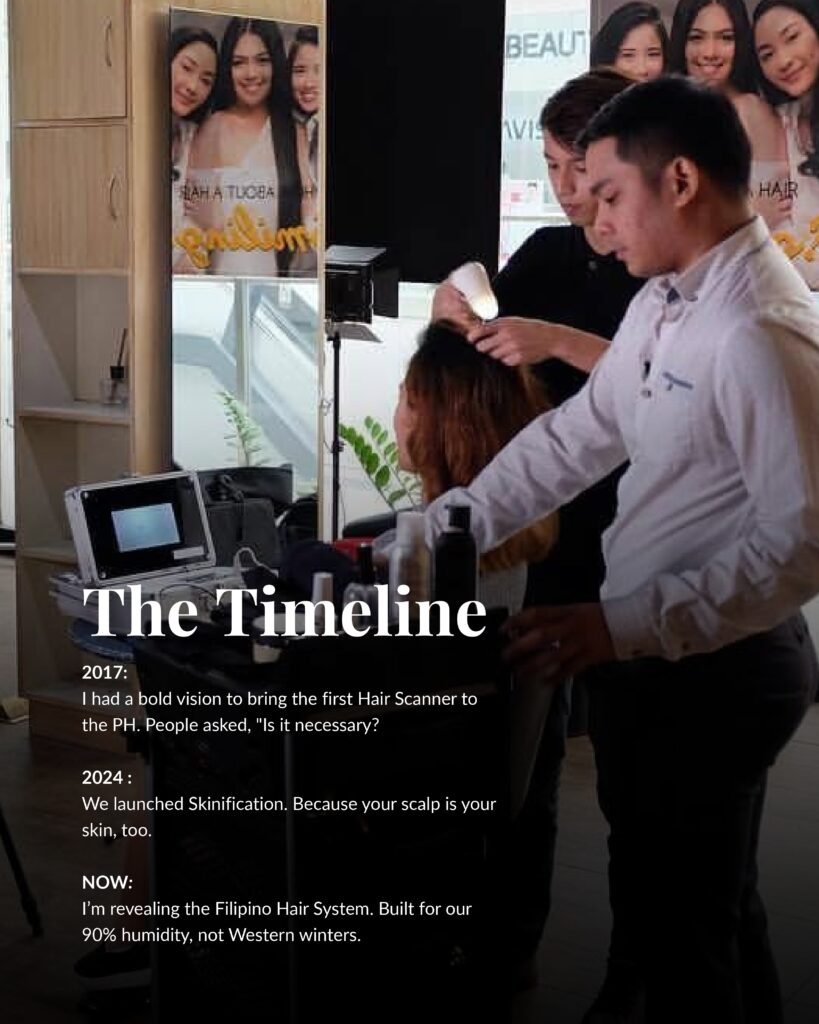
For Mark of MARK’ed Salon, years of studying hair behavior point to a different conclusion. The issue isn’t what Filipinos are using. It’s the system they’ve been taught to follow. Since 2018, through scanning and close observation of scalp conditions, one thing became clear: Filipino routines follow Western standards that were never meant for this climate.
And yet, the industry been treats them as universal.
Humidity Changes Everything
Western brands design hair care around cold, dry environments—places where sweat is minimal and oil production is controlled. In that setting, stretching wash days makes sense. It maintains balance.
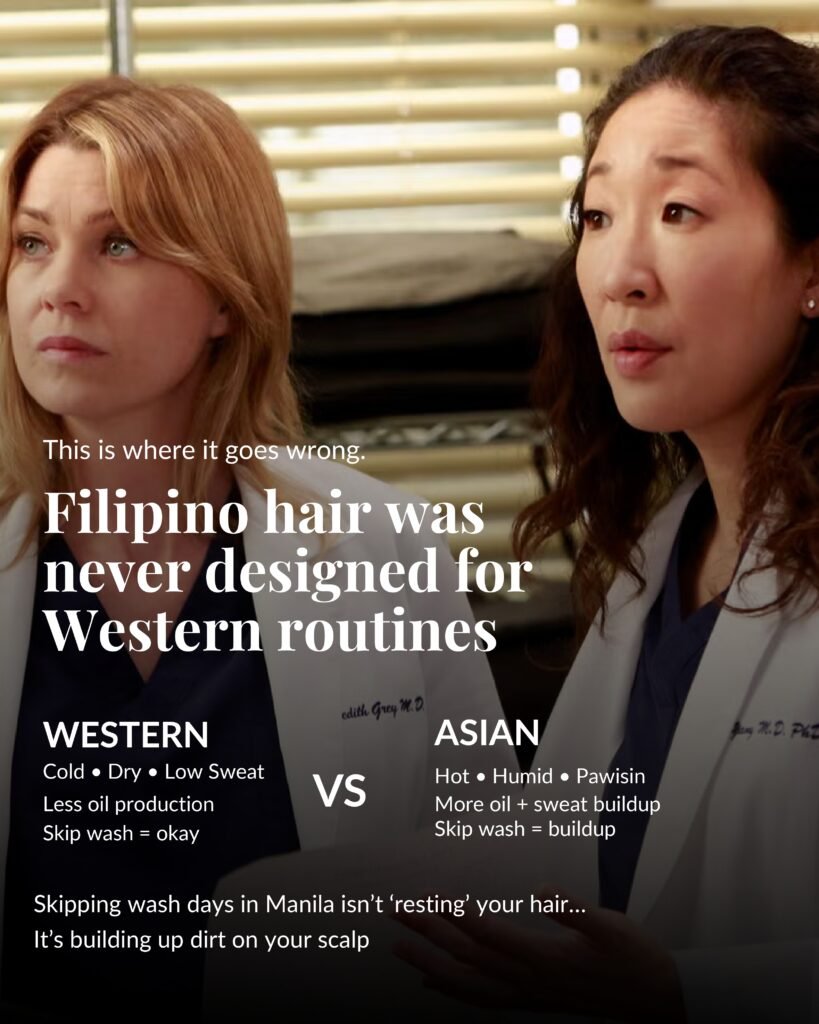
By contrast, in the Philippines, it disrupts it.
Heat and humidity accelerate everything. The scalp produces more oil, the body sweats more, and the air carries pollutants that cling easily to both. Many people frame this as “resting” the hair becomes accumulation. The longer you leave the scalp unclean, the heavier that buildup becomes.
This is why in a tropical climate hair behaves the way it does. It’s not unpredictable. It’s responding exactly to its environment—just not to the routine imposed on it.
The Buildup No One Talks About
What sits on the scalp is more than oil. It’s a mix of sweat, pollution, and residue that forms a barrier—what Mark describes as a “follicle cap.” It blocks the scalp, weighing it down and disrupting healthy growth. The effects are visible: strands that feel thick with residue, roots that collapse, texture that turns frizzy without reason.
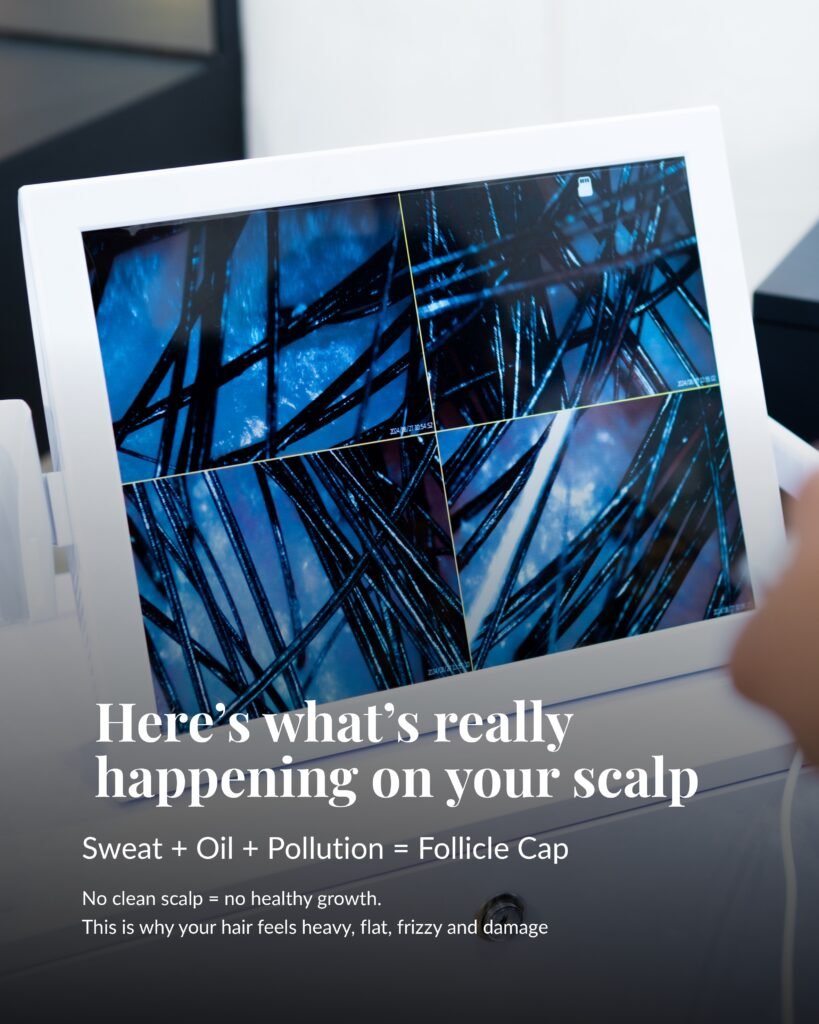
Except there is a reason.
The conversation around hair has long focused on ends—on shine, smoothness, and styling. But the condition of the scalp dictates everything that follows. Ignoring it doesn’t simplify the routine. It undermines it.
Mark’s introduction of “skinification” in 2024 pushed this idea forward, reframing the scalp as skin that requires the same level of care and attention. Even so, that shift exposed a deeper issue. Awareness alone doesn’t correct a system that was flawed to begin with.

A More Precise Way of Looking at Hair
The Mark Hair Audit moves away from generalized advice and forces a more grounded approach. It doesn’t rely on trends or assumptions. It looks directly at how people live with their hair—their habits, their environment, and the condition of their scalp.
Routine cannot be separated from climate, in a place like the Philippines. It has to respond to it.
This is where most hair care conversations fall short. They treat environment as secondary, when in reality, it dictates everything. A routine that ignores heat and humidity will always produce the same result, no matter how expensive the product is.
Filipino Hair Was Never the Problem
The idea that Filipino hair is difficult or unmanageable has been repeated for years, often without question. But that narrative collapses under scrutiny. Hair responds to how it’s treated and where it exists. When the system is misaligned, the results will always feel like failure.
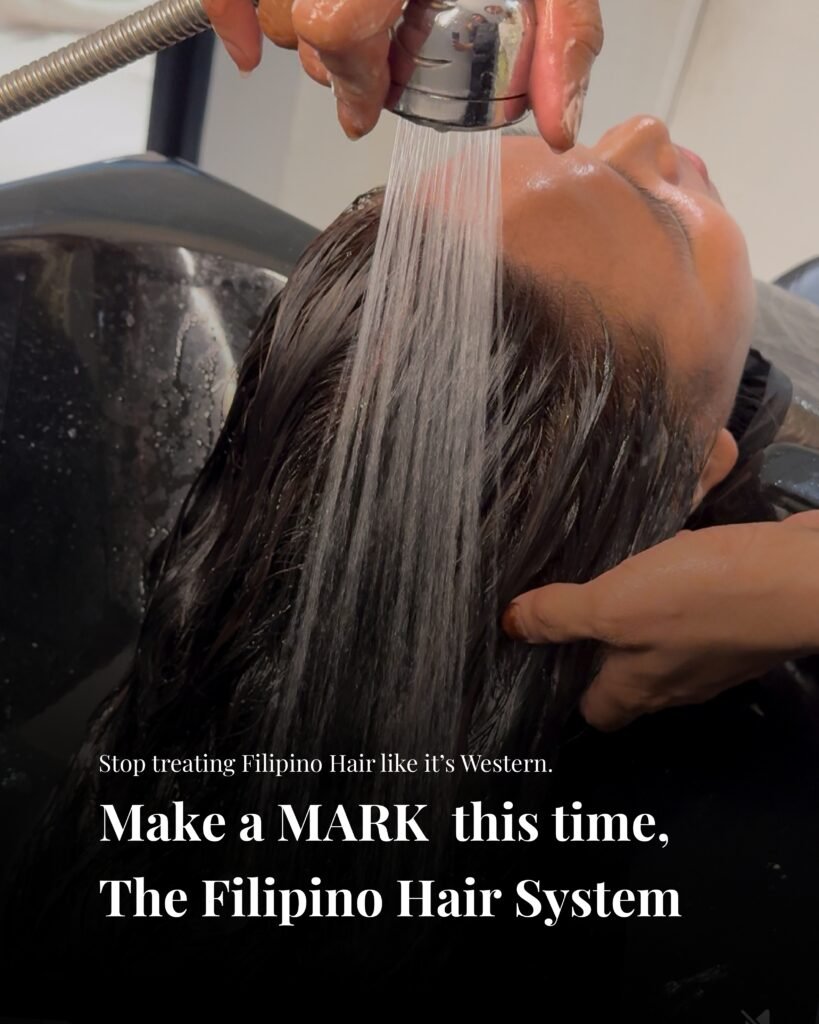
Mark’s Filipino Hair System reframes that entirely. It doesn’t try to fix the hair. It corrects the approach.
Because this has never been about finding the right product.
It’s about unlearning the wrong routine.