

Why We Shouldn’t Normalize These Family Reunion Lines

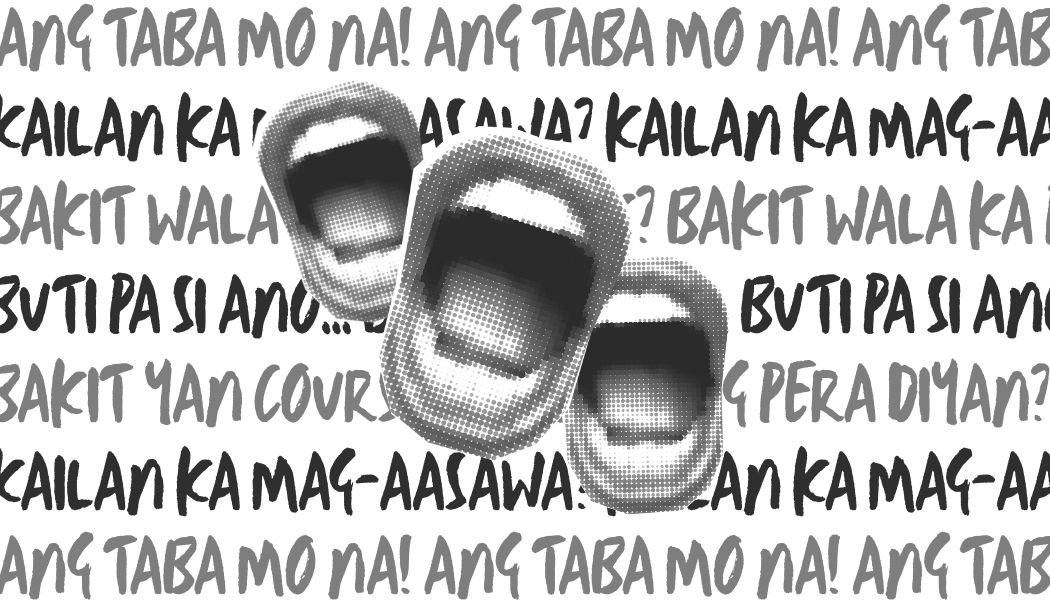

Who wouldn’t hesitate to attend a family reunion, knowing that the familiar remarks are already waiting for you?
Many family members speak these lines casually—sometimes with a laugh, often without malice. After a comment is thrown into the air, the conversation moves on, leaving the person at the center to carry the emotional weight alone.
What makes these moments harder is the expectation to smile through them—to laugh it off and still respond politely. Filipino gatherings rarely leave room for discomfort, especially during special occasions, forcing us to endure it out of respect.
Tumaba ka!
People often pass off this line as a casual observation or even a joke, sometimes adding remarks like, “napabayaan sa kusina.” They say it lightly, as if anyone has the right to comment on a person’s body.
What many fail to realize is that behind physical changes are stories no one sees—it can be the quiet result of stress, illness, emotional exhaustion, or simply the natural changes that come with growing and living.
When people repeatedly make comments like this, they slowly shape how a person sees themselves. It can plant seeds of self-doubt, body shame, cause a loss of confidence, and make someone hyper-aware of their appearance. In some cases, the emotional toll is heavy enough that the person begins to withdraw, avoid gatherings, or distance themselves from family interactions altogether.
Kailan ka mag-aasawa?
This question assumes that marriage is a universal milestone—something everyone must achieve by a certain age. It is often accompanied by comments like, “mahirap tumanda nang walang pamilya!”
Even when they say, “we’re just concerned,” they often ask this question out of cultural norms rather than genuine care. It implies that everyone should follow a traditional timeline in life and disregards personal choice, individual readiness, and unique life circumstances.
They forget that not everyone prioritizes marriage the same way. Some focus on their careers, personal growth, financial stability, or education, while others simply choose not to marry at all.
Bakit wala ka pang anak?
This question cuts deeper than most realize. It assumes that an individual is obligated to continue the family bloodline.
What it ignores are private struggles, painful journeys, or even the conscious choices someone has made. Some are still healing from loss, some face infertility, some are not ready, and some simply choose a life without children—and none of these reasons require explanation.
And the worst part? Sometimes people follow this question with, “walang mag-aalaga sa iyo pagtanda mo!”—pressuring the person and placing a huge responsibility on a child who doesn’t even exist.
Buti pa yung anak ni ano…
This line often comes disguised as a harmless comparison, usually followed by a list of achievements—nakapagtapos na siya, may trabaho na sa abroad, nakapag-asawa ng mayaman, marami nang negosyo. They say it casually, as if comparing lives were a form of motivation rather than quiet harm.
What this comparison fails to consider is that every person’s circumstances, opportunities, struggles, and timing are different. Reducing someone’s worth to how closely they resemble another person’s life path erases their individuality and dismisses their efforts, progress, and unseen battles.

These comparisons often breed shame, making people feel as though they are never quite enough.
Bakit yan course mo? Walang pera dyan!
Even if said out of concern, the underlying message is clear. It suggests that the only “right” path is one that promises financial success, completely overlooking personal passion, individual growth, and long-term fulfillment.
Repeatedly hearing remarks like this can create stress and self-doubt. It pushes individuals to question their decisions, feel guilty for following their true interests, and worry about disappointing their family.
Over time, a person may hesitate to share achievements, avoid talking about their goals, or feel the need to constantly justify their decisions, even in the presence of loved ones.
Many people leave reunions feeling drained—not because they dislike their families, but because they feel pressured to present a version of themselves that seems “acceptable.”
After all, a family reunion should be a space to deepen relationships, not a moment for prying into or digging up someone else’s life. Just because these lines are familiar does not mean they are harmless—and just because they are common does not mean they should be normalized.
This holiday season, perhaps the kindest thing we can bring to the table is not another comment, but a little more understanding—and a gentle reminder that boundaries, too, are a form of love, not just the usual family reunion lines.