

Made Here, Worn Proudly: Filipino Stories Beyond the Familiar

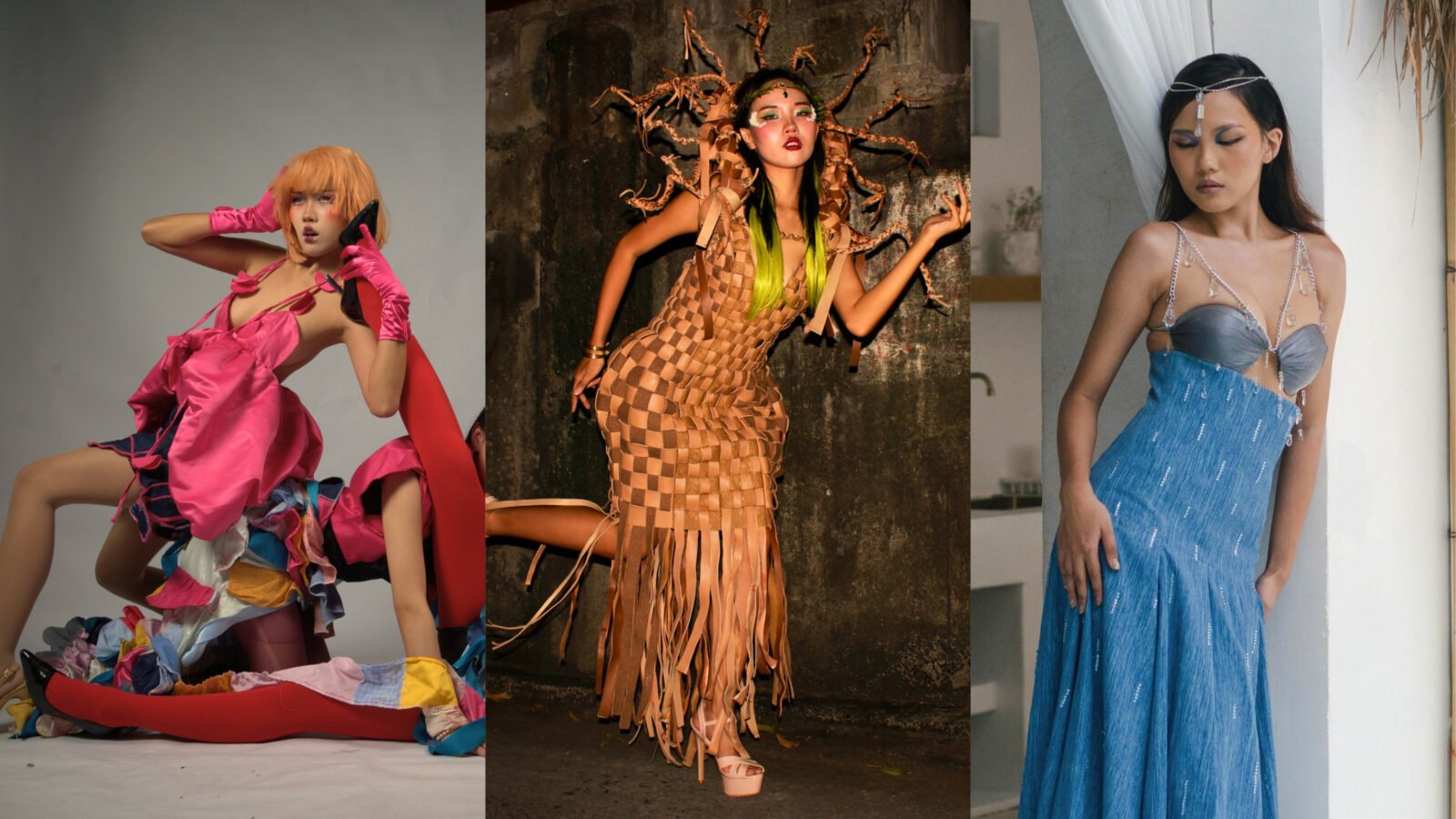

From everyday Filipino objects to reclaimed textiles and personal reflections, three local designers explore the many ways Filipino identity can take shape through fashion.
Filipino fashion does not always announce itself through familiar silhouettes or traditional textiles. Sometimes, it appears in the things we pass every day: woven materials, street-side delicacies, or colorful flags hanging above marketplaces. Other times, it emerges from personal experiences, memories, and the desire to understand oneself.
For local designers Ron Roxas, Althea Claire, and Martin Almeda, fashion becomes a way to translate these influences into something unexpected. Through unconventional materials, thoughtful construction, and personal storytelling, their creations show how Filipino fashion can move beyond familiar representations while remaining connected to the stories that shape it.
Ron Roxas: Finding Stories in the Ordinary
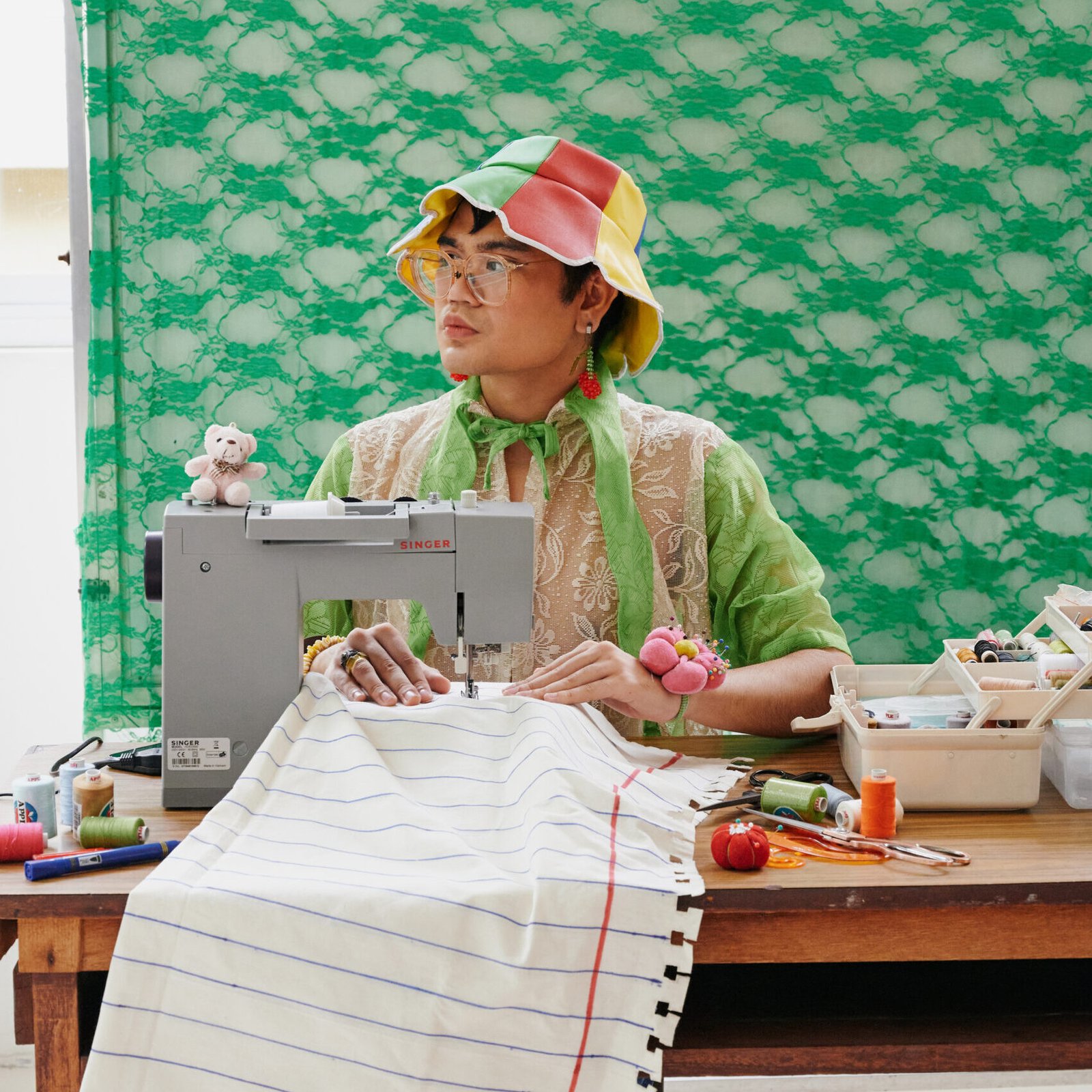
For Ron Roxas, inspiration often begins with familiar Filipino experiences. Rather than relying solely on traditional garments, he looks at everyday objects, childhood memories, and cultural references, finding new possibilities in things people might otherwise overlook.
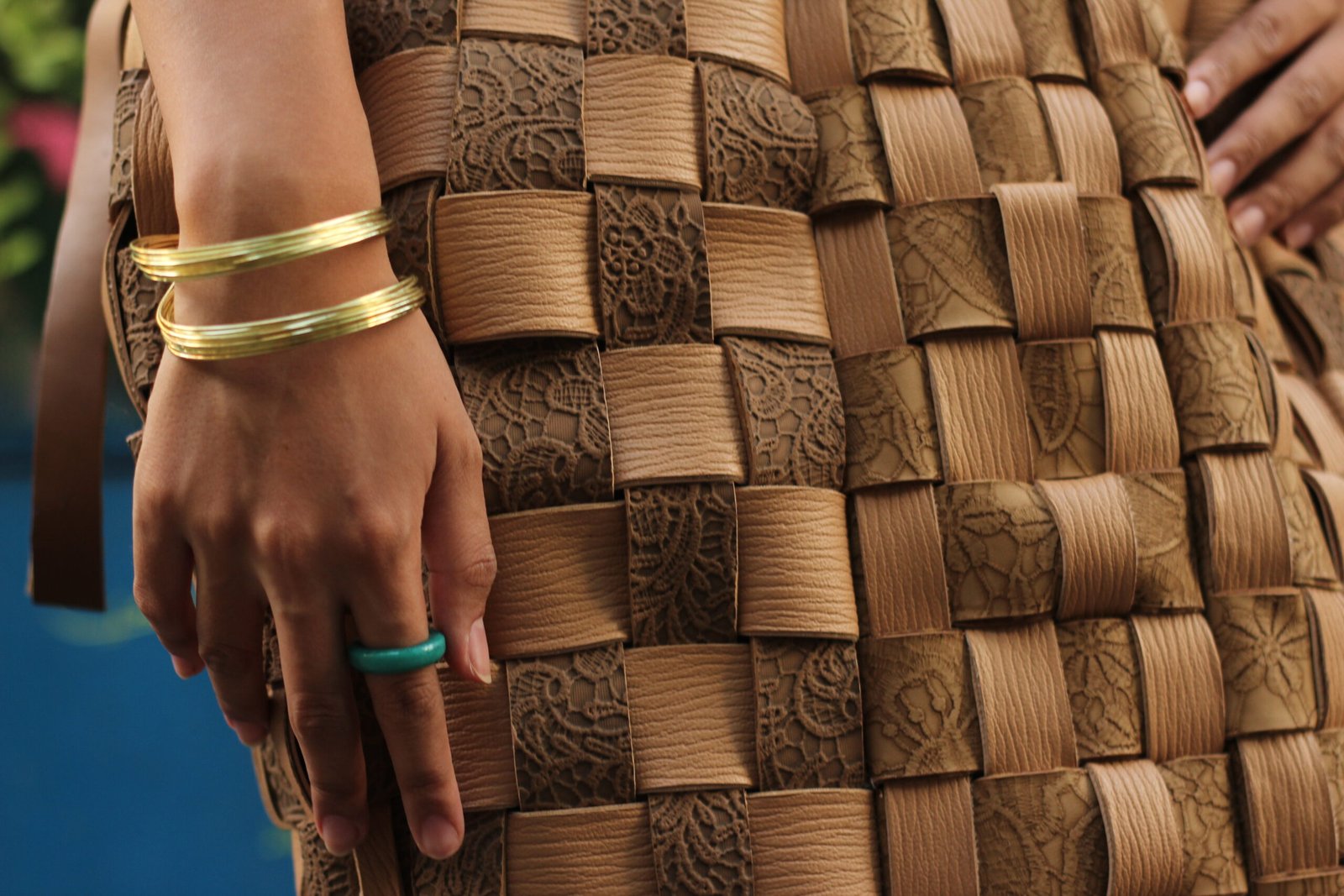
His palaspas-inspired garment draws from his Catholic upbringing and memories of Palm Sunday. Its construction features a checkerboard-like woven bodice and skirt, with overlapping strips that extend downward into long, fringe-like details. A sculptural headpiece, built from twisting branches and hanging strips, frames the model’s face. Together, these elements transform a familiar religious symbol into an unconventional runway silhouette.
He also explored the textures of banig and abaniko, translating their recognizable weaving patterns into wearable forms.
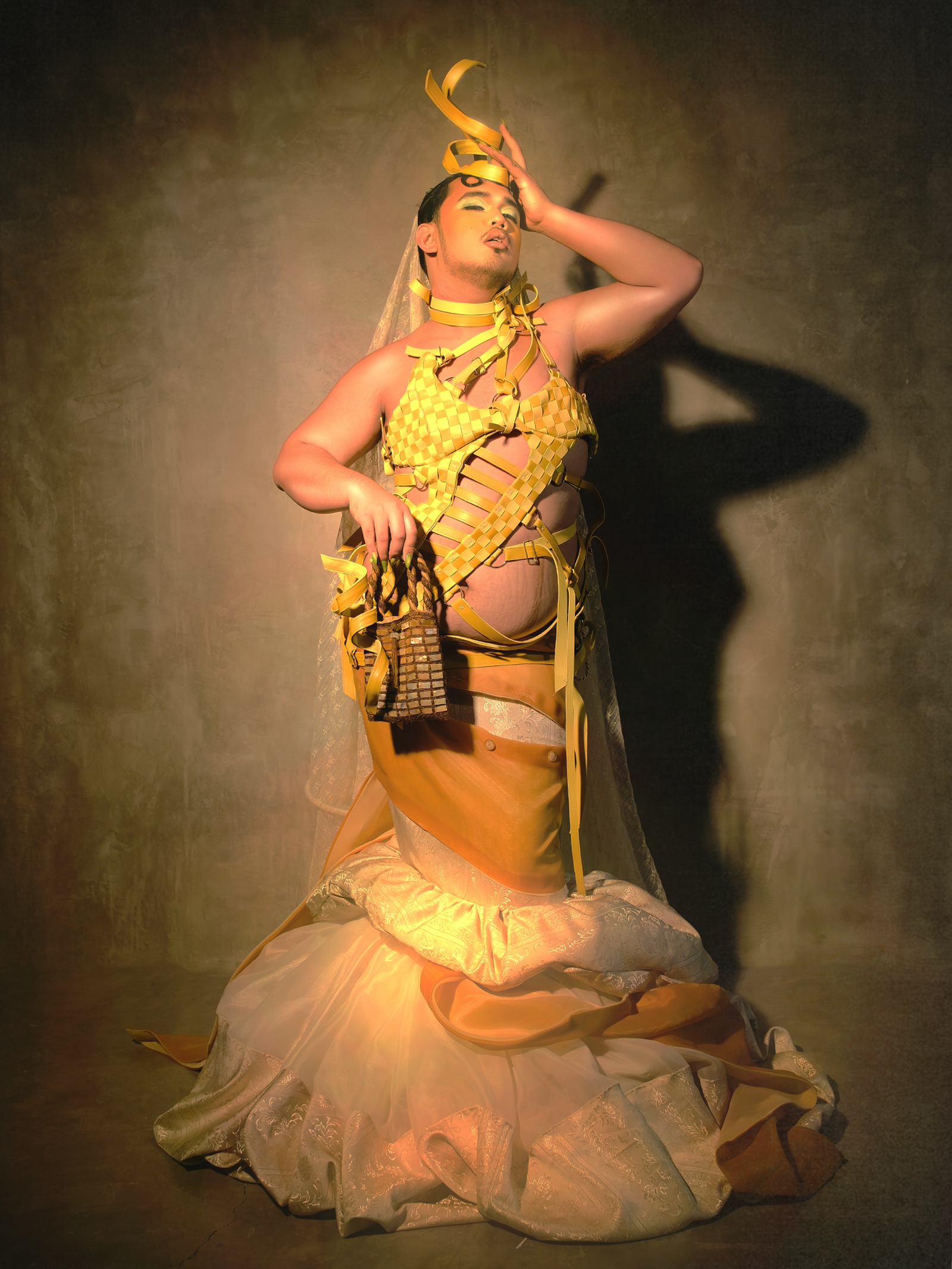
His fascination with Filipino delicacies also found its way into his designs, particularly through a suman-inspired ensemble. The idea grew from a thoughtful exchange with fashion and pop-culture content creator Neo, popularly known as Ice Neo. Ron offered to create a custom piece for Neo’s first Preview Ball appearance without expecting payment. In return, Neo sent him two bilao of bibingka as a token of gratitude, turning a simple exchange between creatives into an unexpected source of inspiration.
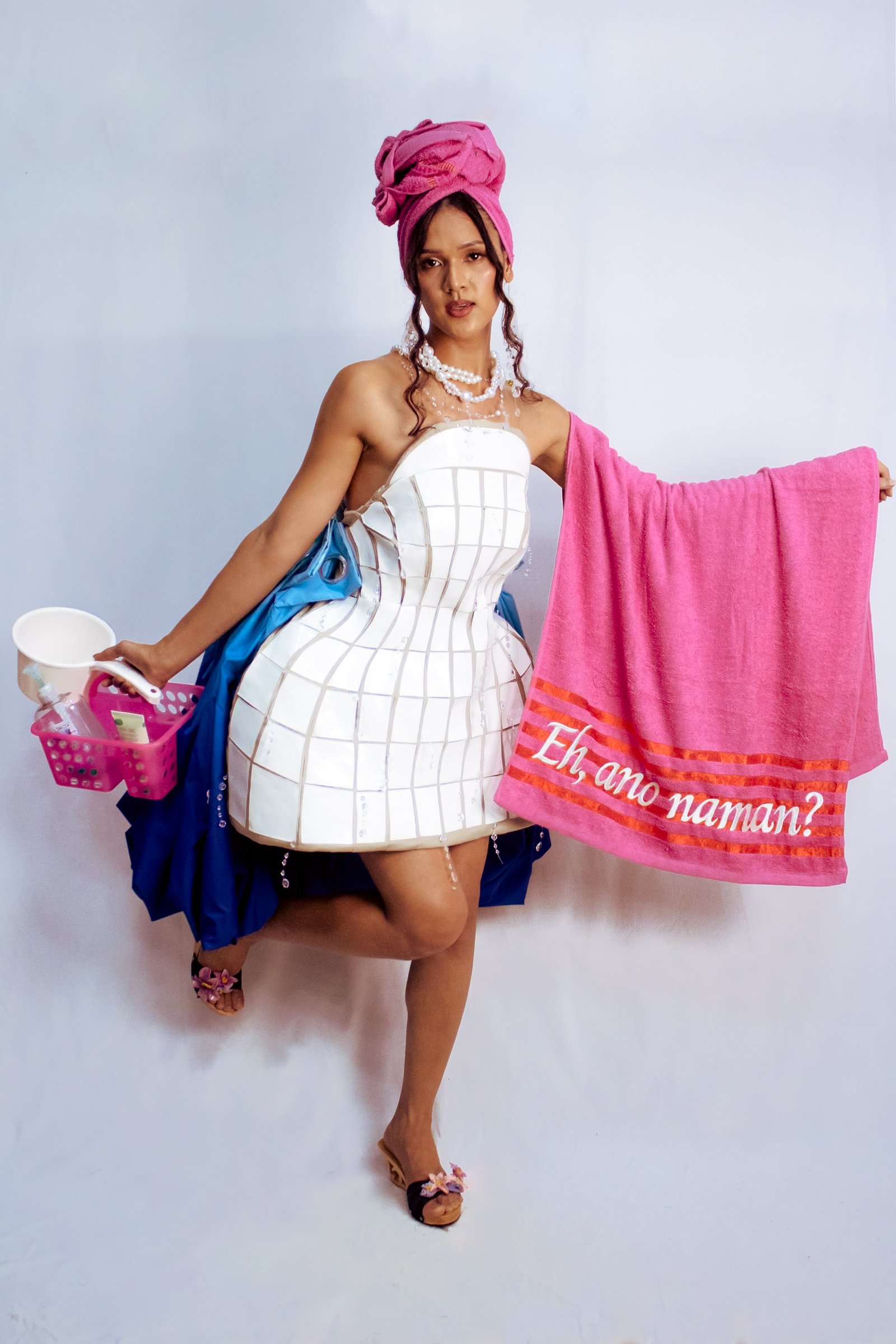
This same eye for the familiar extends to everyday spaces, as seen in his bathroom-tile-inspired design. The white, structured mini dress features a raised, grid-like surface reminiscent of tiled walls. Its fitted bodice and exaggerated, rounded skirt give the piece an almost architectural appearance. From a distance, the textured surface also resembles crocodile scales.
Through these designs, Ron Roxas demonstrates how familiar Filipino experiences can become starting points for creative experimentation.
Althea Claire: Giving Materials Another Life

While Ron Roxas draws from cultural memories and everyday references, Althea Claire approaches fashion through material transformation. Her practice places value on what already exists, particularly textiles and clothing that might otherwise be discarded.
Her interest in sustainability became more intentional during the pandemic. The period encouraged her to look more closely at fashion’s environmental impact and reconsider how materials could be used rather than immediately replaced. She began exploring ways to make the most of available resources, including old garments, donated fabrics, and leftover textile pieces.
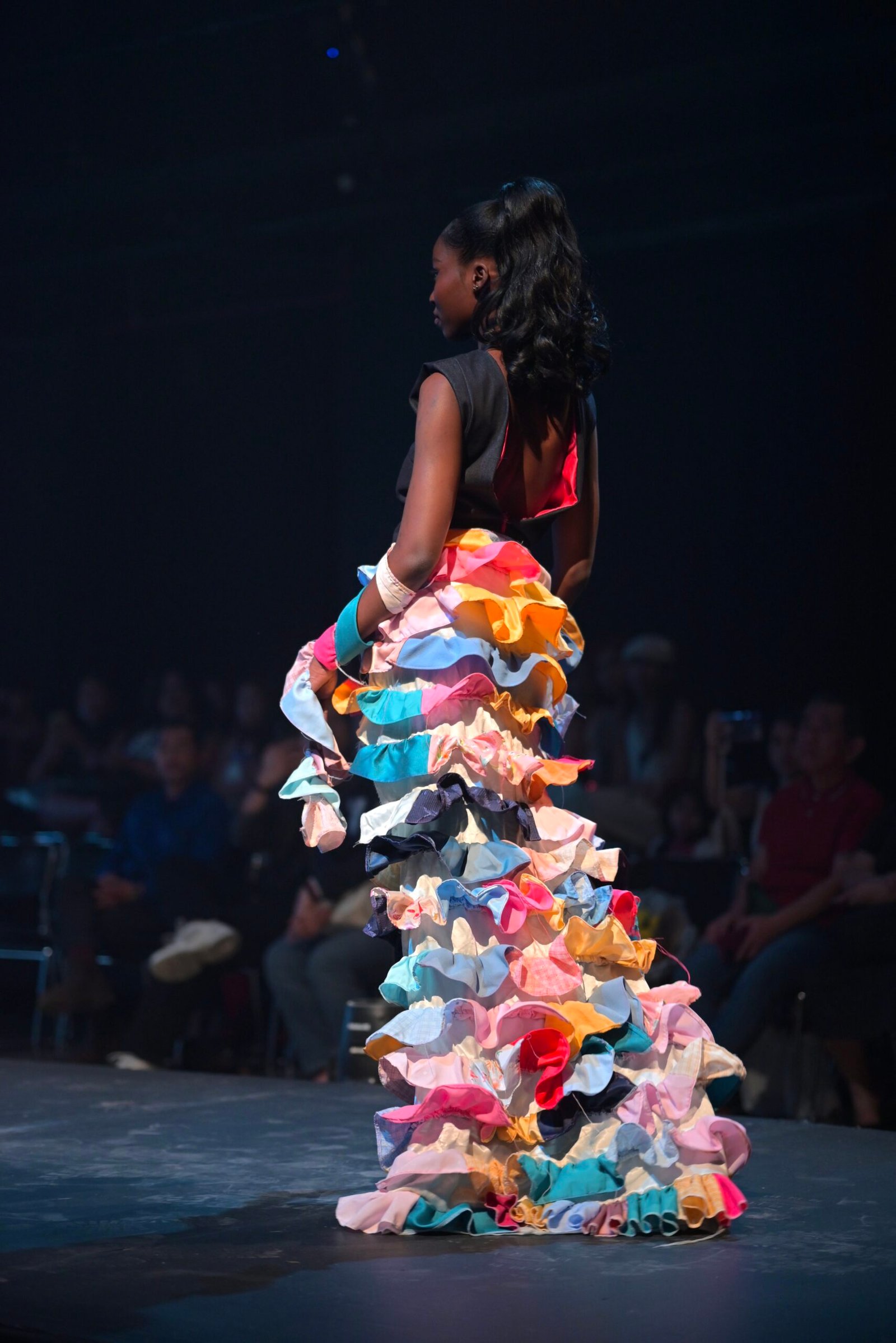
Even small fabric remnants remain part of her creative process. Rather than treating them as waste, she keeps them as potential materials for future designs.
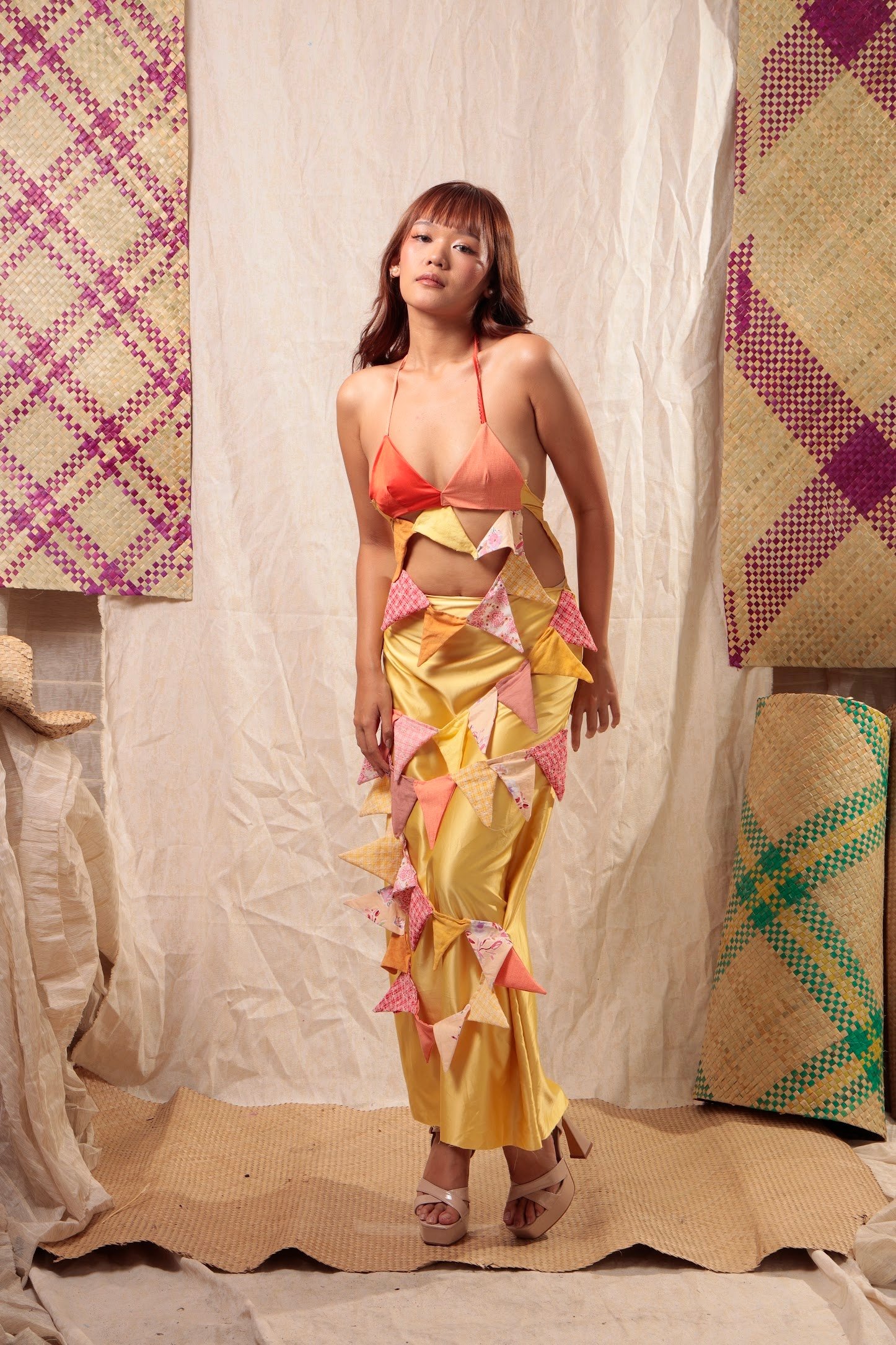
This resourcefulness also finds expression in her banderitas-inspired creation for PUP Fashion Week’s MERKADO. The ensemble features a bright yellow base, with contrasting pink patterned fabric arranged into irregular triangular accents. These pieces extend across the garment, creating the appearance of colorful flags fluttering around the body. Its asymmetrical construction and playful details turn an ordinary sight at Filipino celebrations into a contemporary runway look.
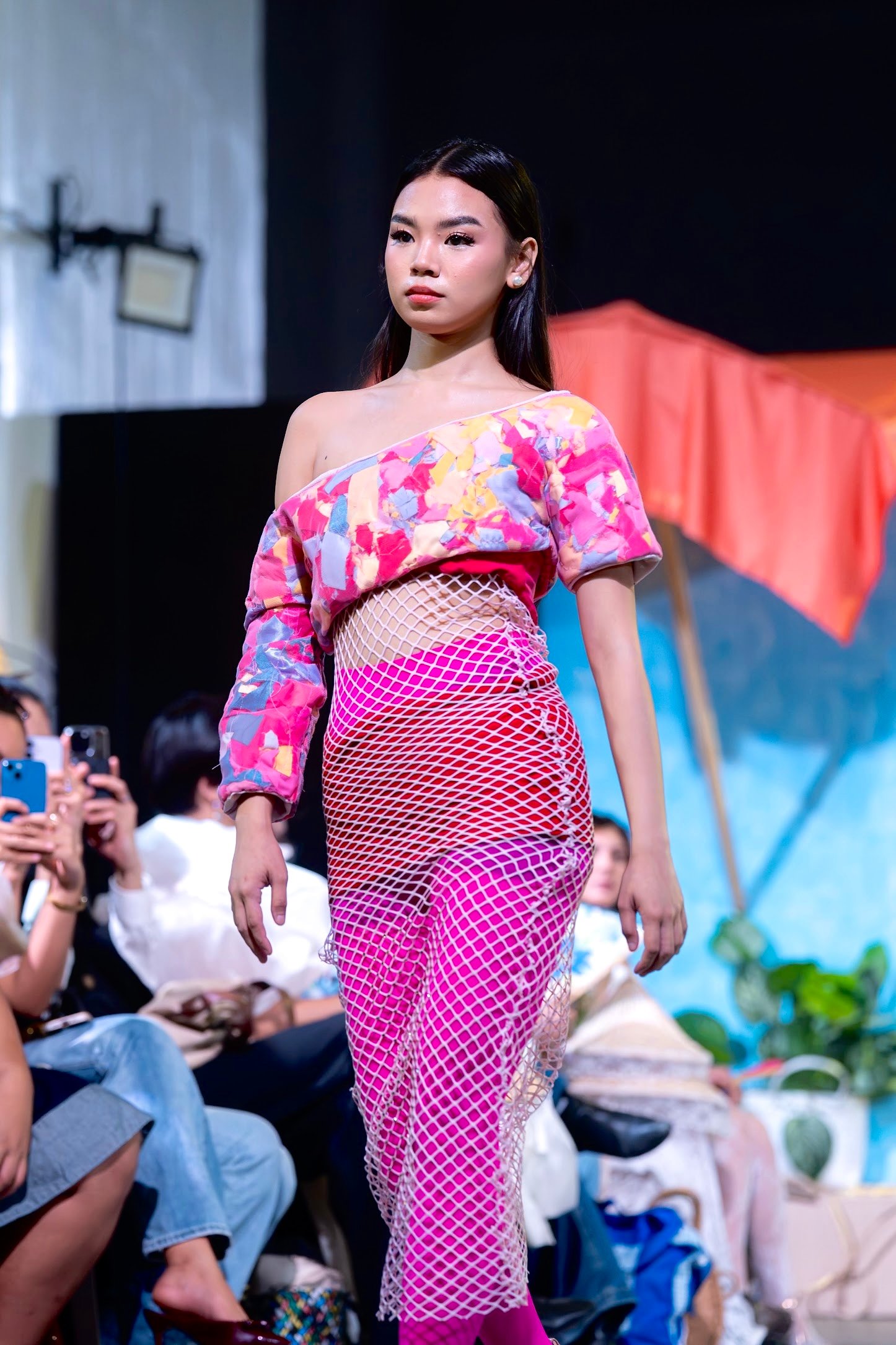
For Althea Claire, sustainability does not mean limiting creativity. It means recognizing the possibilities of materials already within reach and giving them another purpose through design.
Martin Almeda: The Art of Becoming
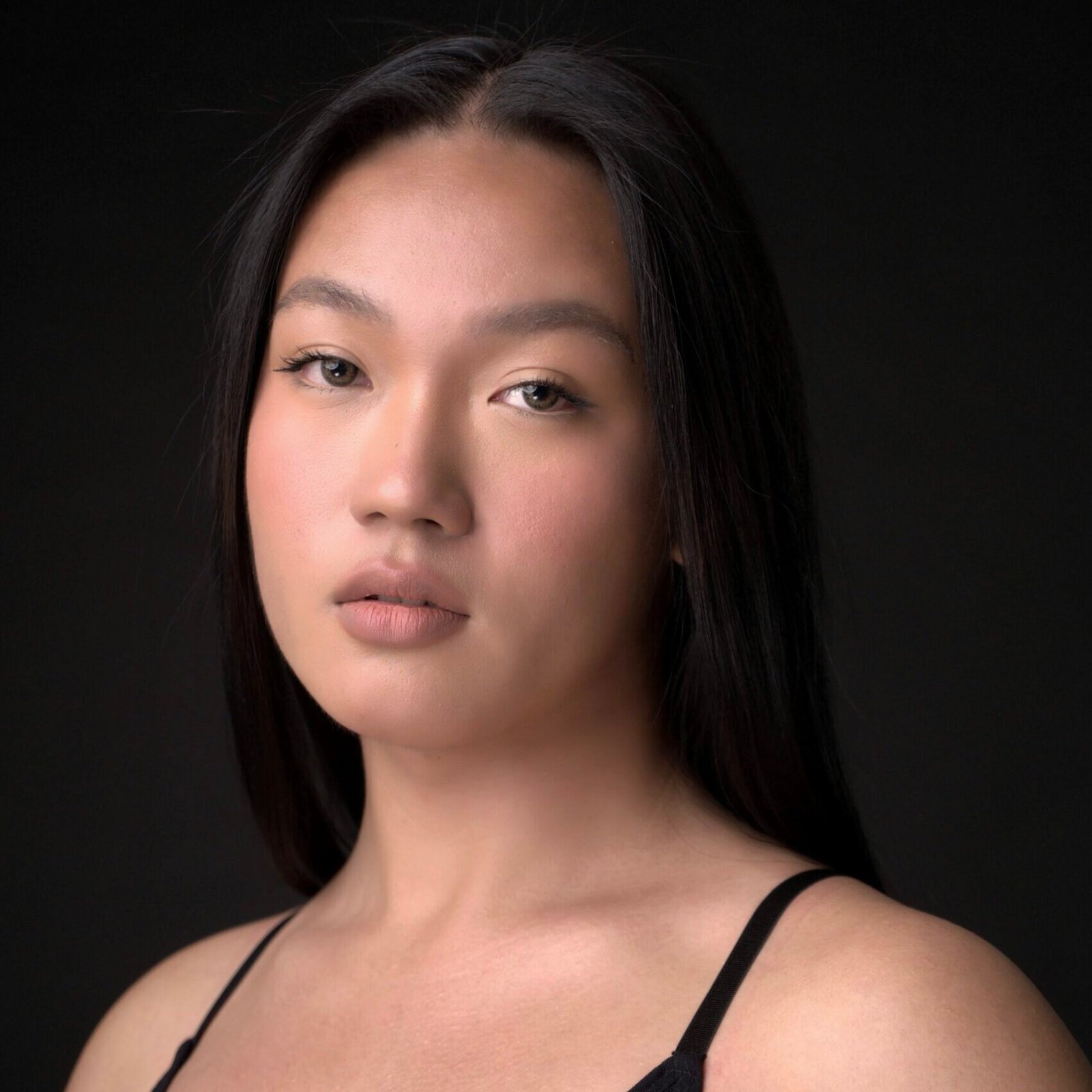
For Martin Almeda, who works under the name Martin Artisan, fashion takes a more introspective direction. Her creations explore identity, personal experiences, and the uncertainties that accompany artistic growth.
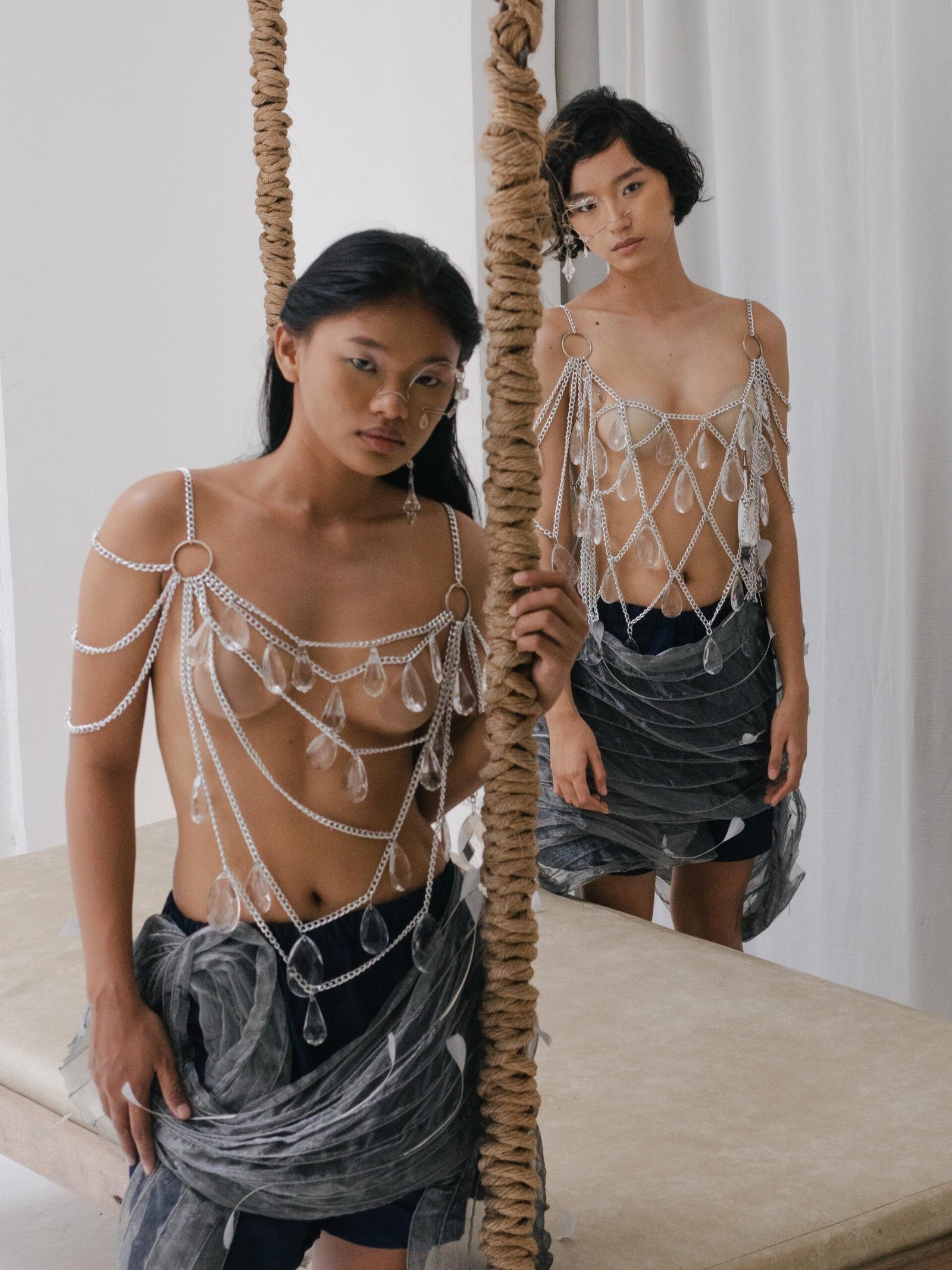
Her collection ANINAW serves as a visual reflection of her journey as an artist. It explores the uncertainty, failures, and discoveries that shape a person while navigating who they were, who they are, and who they are still becoming.
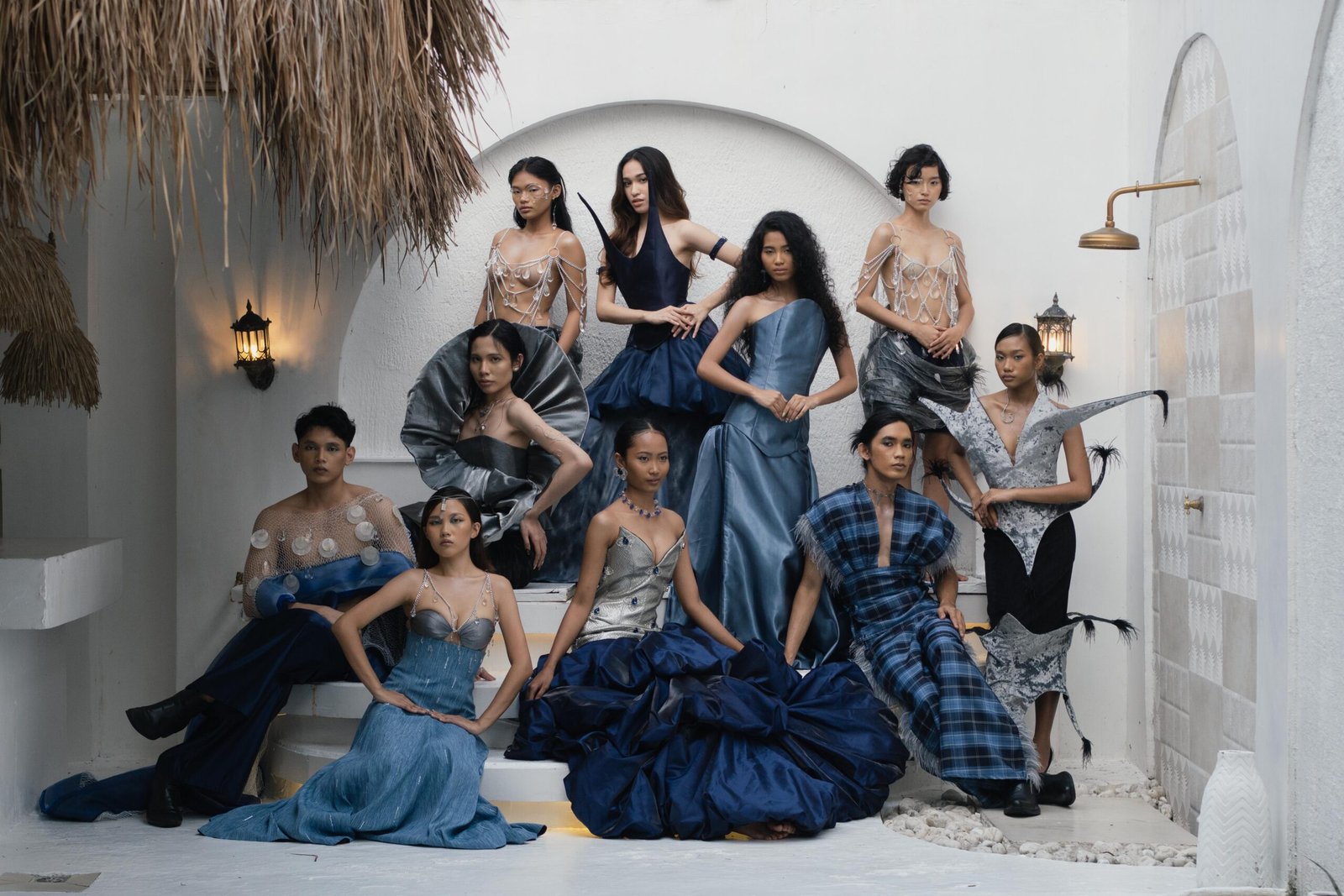
The collection unfolds through ten looks, each representing a different chapter of that journey. Some convey restraint and fragility, while others express strength and freedom. Among its designs are unfamiliar silhouettes featuring sculptural curves and spikes, challenging her to move beyond forms she had previously explored.
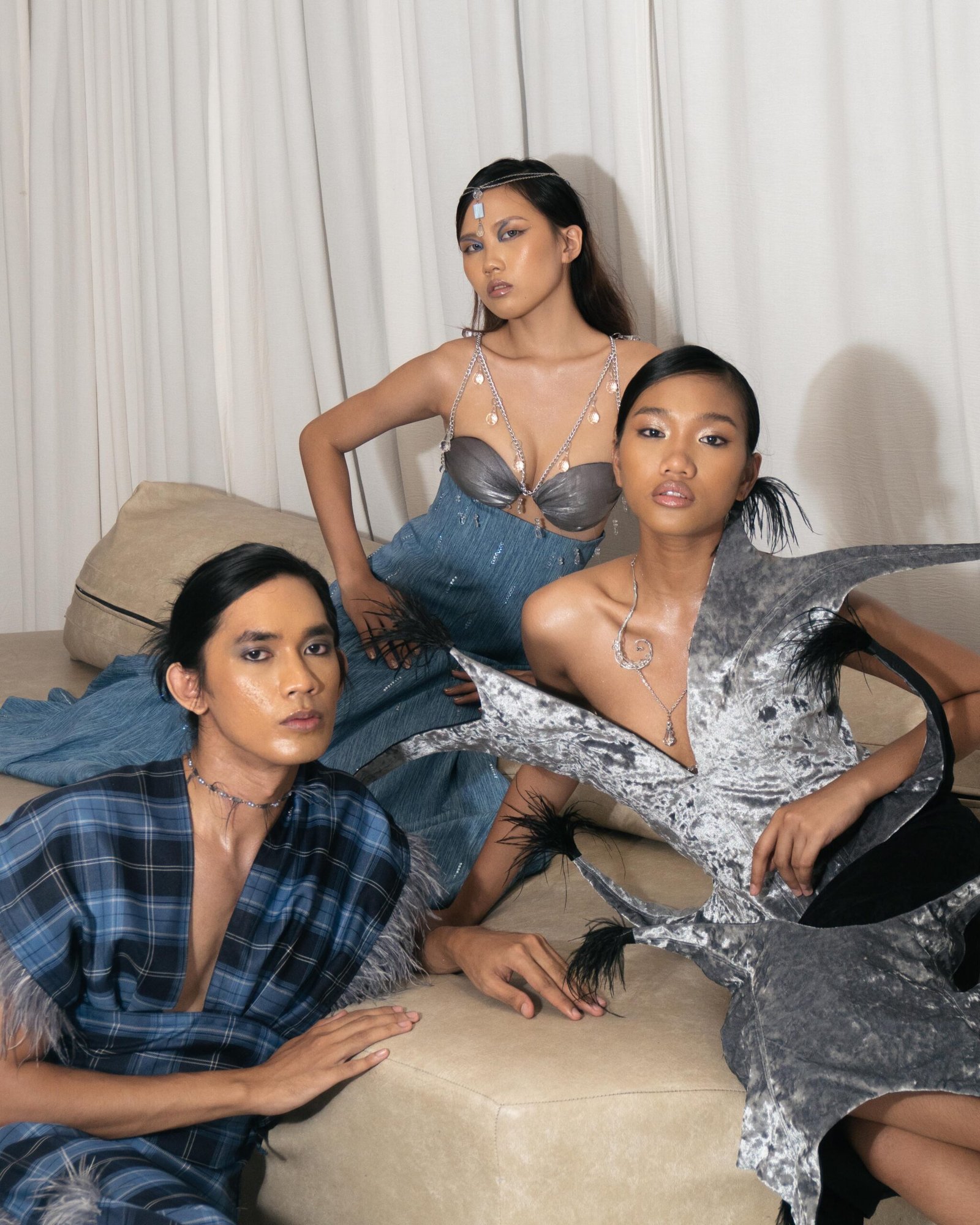
Rather than presenting a finished version of oneself, ANINAW embraces the idea that identity remains in motion. Each experience becomes part of an ongoing process of growth, with beauty found not only in the outcome but also in the journey itself.
Beyond her personal explorations, Ms. Martin also hopes to see more Filipino creatives engage with the country’s regional textiles, including T’nalak. She recognizes that woven fabrics carry stories beyond their patterns, reflecting the knowledge, labor, and traditions of the communities that produce them. This interest extends the same curiosity behind her creative practice: looking beyond a material’s appearance and understanding the stories it holds.
Beyond What We Know
Filipino fashion continues to take shape through different perspectives. A childhood memory or an overlooked object can become the starting point for Ron Roxas. For Althea Claire, creativity lies in finding possibilities in materials others might discard. Meanwhile, Martin Almeda turns fashion into a reflection of identity and the experiences that shape it.
Their creations offer different interpretations of what it means to make fashion locally. More than reproducing familiar cultural symbols, they reinterpret, question, and give new meaning to the things that surround them.
In doing so, they show that Filipino fashion is not confined to a particular silhouette, material, or tradition. It is also found in the stories, experiences, and creative choices that designers bring into every piece.