
Between Fact and Feed

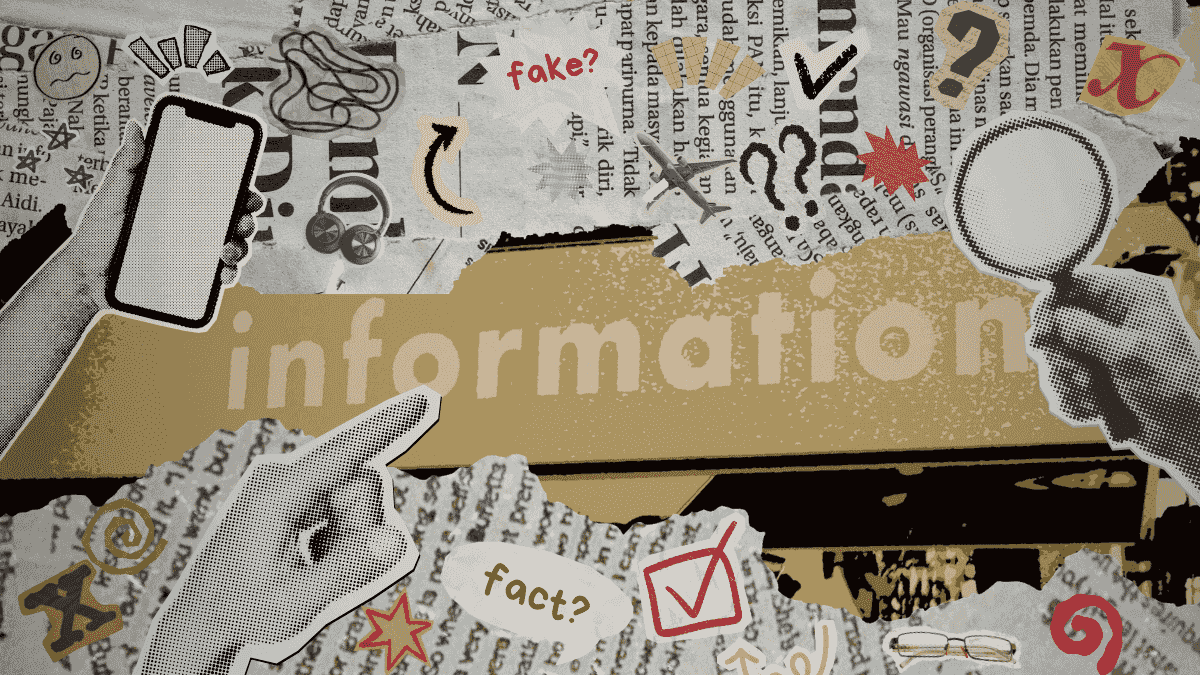

For Filipino youth, who have grown up alongside social media, navigating the space between fact and feed means more than simply knowing how to use a platform.
It means learning what to believe, what to question, and what to verify before hitting “share”.
A 2023 policy brief by the Jesse M. Robredo Institute of Governance at De La Salle University (DLSU) examined how people aged 18 to 25 in the National Capital Region could identify fabricated content from factual information.
The findings reveal a more complicated picture that lies beyond the belief that the youth can either discern misinformation or be blinded by it.
Not All “Fake News” Are the Same
The term “fake news” has become a part of our everyday language, it has become synonymous to false information online, but it does not neatly describe every kind of misleading content. There are specific terms used to describe it.
Not every misleading post is delibertely fabricated.
A user who shares a false claim without their knowledge is spreading misinformation; someone who intentionally creates it to deceive others is enganging in disinformation. On the other hand, malinformation refers to someone using real content to manipulate public opinion or harm a person’s image and reputation.
These all sound distinct to one another, yet they are collectively under the term of “information disorders” which are harmful information that disrupts the information environment (IE), leading to users having to slow down and sort through everything they see on the internet.
Then there comes satire.
A satirical post may exaggerate or twist reality to entertain, criticize, or comment on an issue. It is not really misinformation simply because someone misunderstands the joke.
But when satire resembles genuine news, distinguishing the two can become difficult.
The complicated picture is not whether a person can identify a lie, but rather how they can recognize the context behind it.
Some can discern the fact, yet others struggled with the fake
In 2022, the researchers surveyed 307 youths in Metro Manila through a 10-item questionnaire designed to measure their ability to distinguish fabricated content from factual news.
The results were encouraging, but not absolute.
Out of 307 respondents, 193 scored seven or higher, revealing a relatively strong ability to distinguish the fake from the factual information. Meanwhile, 114 scored six or lower, indicating greater struggle in identifying the difference.
The numbers tell a story that is more nuanced than simply saying that the youth are either good or bad at spotting misinformation. It depends on the kind of content they encounter.
Most of them demonstrated the ability to analyze the presented material, however, there are some who still grapple with identifying the items.
The study found that some respondents struggled in distinguishing satirical material and historically distorted information.
A familiar-looking headline, a convincing image, or a post that confirms what someone already believes can make information appear more credible than it actually is.

Fact-Checking the Feed
In a feed where fact, opinion, advertising, satire, and misinformation can appear within seconds after another, digital literacy becomes more than knowing how to navigate an app.
It means knowing when to pause and think…
Who published this?
When was it published?
What evidence supports the claim?
Can another reliable source confirm it?
These questions may seem mundane, but they turn mindless scrolling into active evaluation.
The responsbility doesn’t solely rely on the youth. Schools, media organizations, civil society groups, and social media platforms also have roles in creating an environment where reliable information can be easier to find and evaluate.
The Filipino youth are not merely audiences of information. They are also its participants—liking, commenting, reposting, creating, and sharing what appears on their screens.
Between fact and feed, perhaps the most important skill is not knowing everything.
It is knowing when to stop scrolling and ask: “How do I know this is true?”